( Need Service? Call or Text for Appointment ) - (619) 485-1600
  • Home
    • About Us
    • Our Suppliers
    • Gallery Of Work
    • Maintenance Tips
    • RC Maintenance Blog
    • RC Motor Testing Analyzer
    • Testimonials
    • FAQ's
    • Newsletter Sign-up
  • Services
    • Kit Builds
    • RC Body Painting Service >
      • Floran-It Custom RC Painting
      • Floran-It 8 Scale Buggy Bodies
      • RCcarStars Basic RC Body Painting Service
    • RC Repairs
    • Motor Services
    • Electronics
    • RC Tune-Up
    • Transmission & Diff
    • Water-Proofing
    • Tire & Wheel
    • Shock Tuning
    • Straight Axle
  • Specialties
    • RC Chassis & Parts Dye Service
    • RC Crawler & Scaler Services
    • Tekno RC Kit Building
    • TLR 22 5.0 Race Ready Builds
    • Traxxas Slash Upgrade Package
    • Traxxax Repair
  • Pricing
    • Mail Order Service
  • Contact

The Effects of Temperature on Silicone Shock Oil

10/19/2020

2 Comments

 
   When you are racing, you tend to get to the track early in the morning and the temperatures are generally at the coolest point of the day.  We then go onto the track and begin to take practice laps, to not only get down the lines on the track but to feel how the RC car is performing based upon your setup.  One common mistake most racers make when at the track, is failing to make changes to the silicone shock oil as the temperatures change throughout the day.

Here is a good example:

In Southern California we race off-road 8 scale outdoors in very desert like conditions.  When we arrive at the track and begin our practice runs, the temperature may be at a cool and pleasant 68 degrees Fahrenheit.  The car feels a little stiff but not enough to justify any changes to shock oils.  We then begin our first qualifier around 10 or 11am and the temperature may have increased to 80 degrees and the car feels great.  By the time the second qualifying race comes around its around 1pm to 2pm and now the temps may be around 100 degrees. You now do your second round of qualifying and your car is very soft and the rear end is bottoming on the jumps, "YEP" you forgot to account for the temperature change and the effect on the shocks.

So now you are waiting for the main event sheets to be posted but you are not sure if you will be one of the first races at 4pm or one of the last races between 9 to 10pm at night.  So again, not thinking it totally through in your mind, you remember you are bottoming out on the jumps and bumps, so you change your shock oil to a thicker oil by 50cst to 100cst more.  THIS IS A BIG MISTAKE, as you have to plan better and anticipate when your MAIN race will be (meaning approximately what time are you going to be on the track) and what might the temperatures be then? With today's smart phones, you have no excuse to not looking-up the hourly temp changes for your area on your favorite weather website.

In the example above, if you changed your shock oils to a thicker CST/Viscosity, say by going up 100cst to maybe a 600cst in front and now 500cst in the rear, in hopes of stopping the bottoming out of the RC on the jumps and bumps. You probably hit the track at lets say 8pm and the temperature is now 80 degrees. This oil change now just made your main event a lot tougher. 

You will remember, your original setup was perfect at 80 degrees in the first qualifier but now you just went up 100cst (front and back shocks) on your RC.  So guess what, your Main Event is going to be bumpy ride!!!!!  

Summary:

So to help you understand how much the temperature can effect your shock oil viscosity, we have included a nice chart that shows the test results of the effects of increasing or decreasing temperatures on the CST (viscosity) of the silicone shock oils from two major shock oil manufactures. The 40wt oils are usually around 500CST at room temps of around 75 degrees.  So assuming you have 40wt or 500cst Oil in your shocks to start with, the chart shows the viscosity rate in CTS increase or gets thicker as it gets colder and CTS decreases or gets thinner as it gets hotter. 

On the right hand-side of the chart is what we recommend you do based upon the temperature changing up or down by at least 10 degrees or more.
So a "Good Rule of Thumb" is to adjust your shock oils
by  2.5wt or 50cst for every 10 degrees in temperature change....
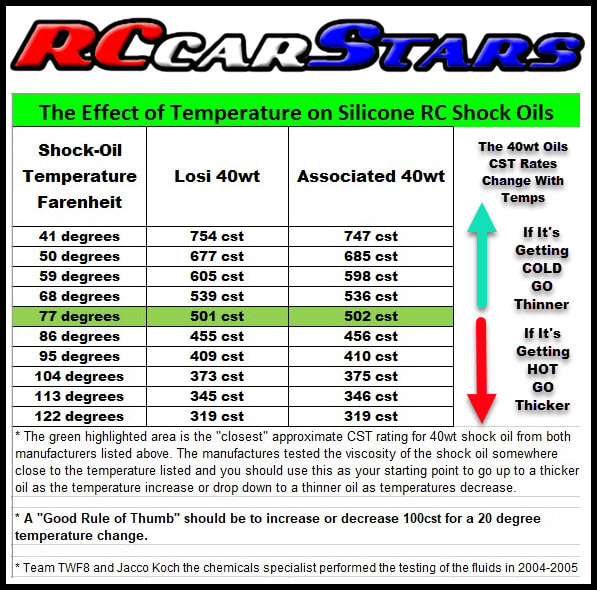
RC Silicone Shock Oil effected cst viscosity rates by temperature during testing
This Chart shows how the 40wt Oils viscosity changes (in cst) as the temperatures changed during testing.
So in closing, remember to always anticipate the temperature changes and how it will effect your shock setups throughout the day. This may be the difference of making it to the winners circle or just having a great run in the MAINs.

Good luck and we hope you find this information useful.

#RCpitTips #RCShockOilChart #TLRshockOilChart #AssociatedShockOilChart

2 Comments

RCcarStars Wins Longest Wheelie Contest

8/6/2019

0 Comments

 
Picture
RCcarStars is continuing our winning streak, this last weekend we attended Mad Cow Bash VIII in Escondido Ca. sponsored by EgyptSean Productions and CowRC. The event had allsort of competitions with a great turnout again this year and we were able to take home the title of the Longest Wheelie Championship for the 4th time!!!

We used our Traxxas Stampede to fend-off all of the 2wd competitors in addition to the highly competitive 4wd Stunt-Trucks now on the market!!!  If you have any questions on making your 2wd Traxxas Stampede a wheelie champ, feel free to reach out to us and we would be more than happy to help you out.

Here's a nice little video we put together of the "Championship Wheelie Run", we pulled a wheelie through the whole parking lot and could have went farther if not for the curb.... 
0 Comments

Understanding RC Servo Torque Ratings

6/18/2019

10 Comments

 
Many people tend to not understand how the torque ratings on a servo are affected by the "hole" you select to connect your steering to on the servo horn. RC servo torque ratings are easy to understand once you understand what they mean and we have provided some visual examples to help you below. 

Torque Rating: The torque rating determines the maximum amount of force the servo can apply at a right angle to a lever (servo arm). This torque force specification is measured and listed in the servo specifications as ounce inches (oz-in) or kilogram centimeters (kg-cm). 

The larger the number, the more force the servo can exert. So this is helpful to use to help choose the correct servo strength based-upon the RC application.  For example, scalers and crawlers tend to get the wheels wedged in-between rocks and will blow-out a weak servo rather quickly. They need torque at 250oz/in or more to be safe. 8 scale buggy racers because of speed and weight also require a heavier torque rating.  Indoor 1/10 scale buggies tend to be around the 125 to 250oz/in range and on-road and RTR rc cars as a general rule are around 120oz to 175oz/in range.  Again these are just examples, and your driving style, type of driving surface, rc weight, skill level and more all play factors in choosing the correct servo torque for your personal liking.
​

So what exactly does 20 kg-cm or 240 oz-in mean? "And how is it affected by the "hole" you choose on the servo arm?"
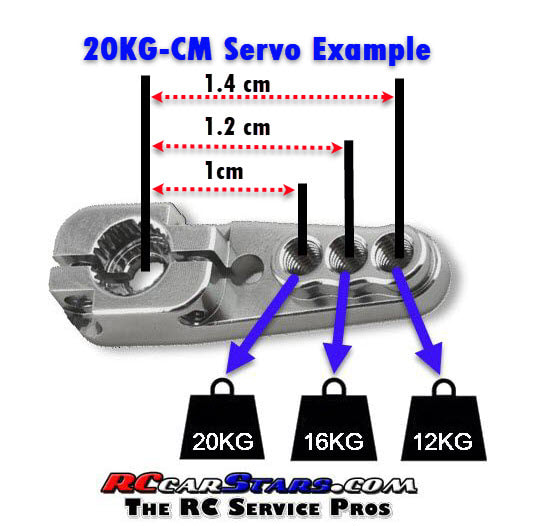
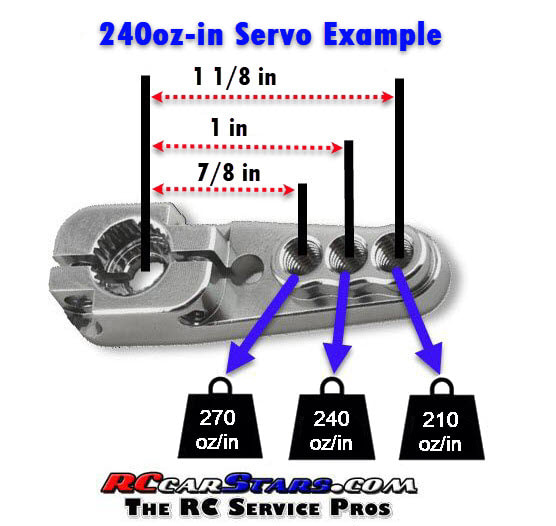
Remember the Torque Rating is based on the distance from the center of the servo shaft to the hole selected in the servo horn.

Picture
Picture
So in the 20kg.cm example above, if the first hole from the servo shaft center is a 1cm distance, the servo torque is actually 20kg. The last hole on the servo arm is actually 1.4cm away from the center so your torque in this example would be more around 12kg.

In the second example the 240oz/in is actually the second hole as it is 1 inch away from the center of the servo shaft.

So with these examples, you basically can see that the "actual torque changes by the hole you choose on the servo arm". This is one of the main reasons so many people have issues with servos because they maybe actually no where close to the torque they need for the application if they do not measure distance and do some quick math. 
Picture
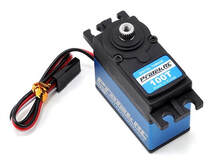
Servo Model :100T 
Recommended Application1/10 Surface 
Operating Voltage4.8V - 6.0V 
Operating Temperature14° to 140° F (-10 to +60° C)
Operating Speed @ 4.8V0.17/60° sec 
Operating Speed @ 6.0V 0.14/60° sec 
Dynamic Torque @ 4.8V 173 oz-in (12.5 kg-cm)
Dynamic Torque @ 6.0V 216 oz-in (15.6 kg-cm) 
The Protek 100T servo shown with the specs above is a great example of a servo that may work out well for most 1/10 scale type applications. But if you install this on lets say, a Tekno SCT410 short course truck, that is really a 1/10 scale short course RC that everyone installs 8 scale esc's and motors into in order to be competitive in racing. Then you also use the hole the farthest out on your servo horn, you may actually be more around 180oz of torque at 6.0v of power and the servo may not last more than a few months of hard racing.

Servo Operation Voltage: Oh yeah, power to the servo also will change the torque rating.  Most modern ESCs can be set to 6 volts and the higher-end ESCs can do 7.4volts or more in the settings. So always pay attention to this also as this is another reason servos fail because of lack of power to servo.

Servo manufacturers usually always provide specs for both speed and torque specifications in two common voltages used for receiver battery packs, 4.8 volts and 6.0 volts. This also translates over to the typical ESC & BEC's for voltage regulation for your electronics. Obviously the 6.0 volts gives slightly higher speed and torque ratings.
High voltage servos (HV) are starting to become more popular and are generally shown with speed & torque specs at 6.0V, 7.4V, & 8.4. These servos will continue to grow in popularity as 2S LiPo battery packs, along with higher current programmable ESCs/BEC's become more and more popular. 

As always we hope you find these tips helpful to your understanding of the RC hobby!!!
10 Comments

Hi-Performance RC Maintenance Tips Using  CowRC Udder Butter, Moo-Kleen & Moo-Slick

5/10/2019

1 Comment

 
CowRC Moo-Slick RC Silicone Lubricant
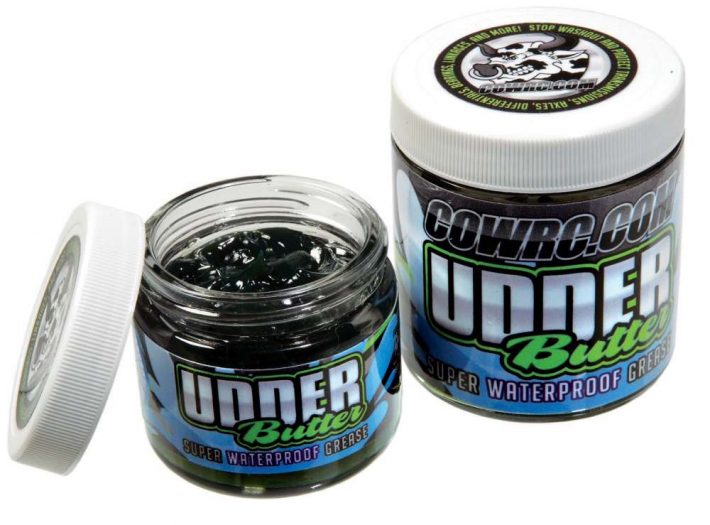
CowRC Utter Butter RC Maintenance
CowRC Udder Butter Lube/Grease
CowRC Moo-Kleen RC Cleaner
Here at our shop in Southern California, we are always ask by customers and other racers, "what do you do to get your gears and bearings to last so long?".  Our response, is always the same, "to make your RC cars last and perform at the ultimate levels, whether you are a racer or basher you must be religious on your RC maintenance program and use only quality proven lubes and grease".  For years, well before we were even sponsored by CowRC to support our race program, we used CowRC Maintenance products.  While the market is filled with both quality and sub-par economical lubes and greases, (and believe me when we say we’ve tried most of them) CowRC's product-line really performs at a higher-level than most.  

What we mean by that, is after hours, weeks and months of use in the extreme condition that RC bashers and racers put their RC cars and trucks through, CowRC products always tended to outperform the competition. 
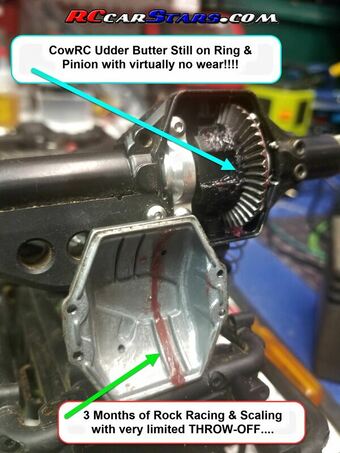
For example: CowRC Udder Butter was tested by us and others in extreme temperature variations. Here on the West Coast, morning temperatures on race-days can be in the low 40's in the morning and track temperatures can be well above 120 degrees by noon and when you couple that with the high-performance motors and ESCs blasting out huge AMPs of power through a drivetrain, very quickly you can have failures in bearings, diffs and transmission gearing.  CowRC's Udder Butter grease is not only waterproof and does not break down in water but it also tends to have very little "throw-off" on Ring-Diff Gears and other transmission parts resulting in the lube actually staying on the parts even at high velocities.  This results in extended life of your gearing in addition to very limited issues of with gearing failures cause by excessive heat and abuse caused by the elements and terrain. 
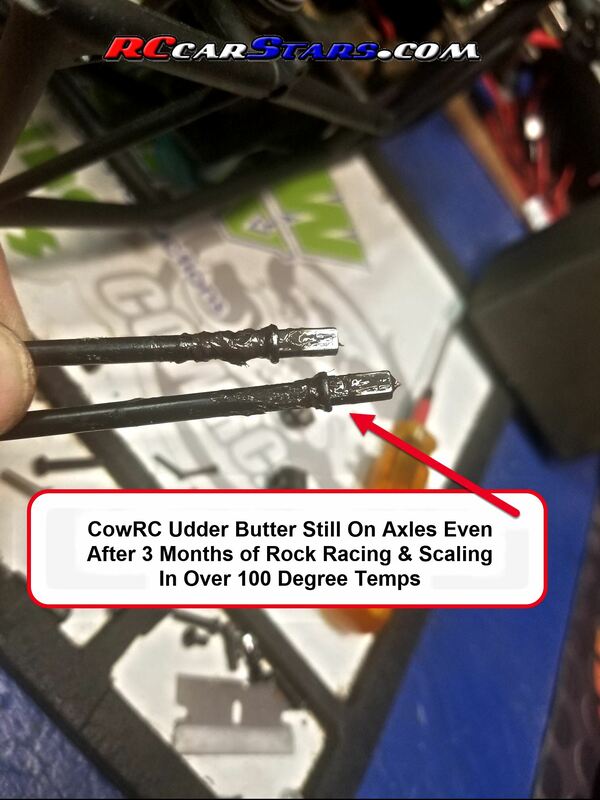
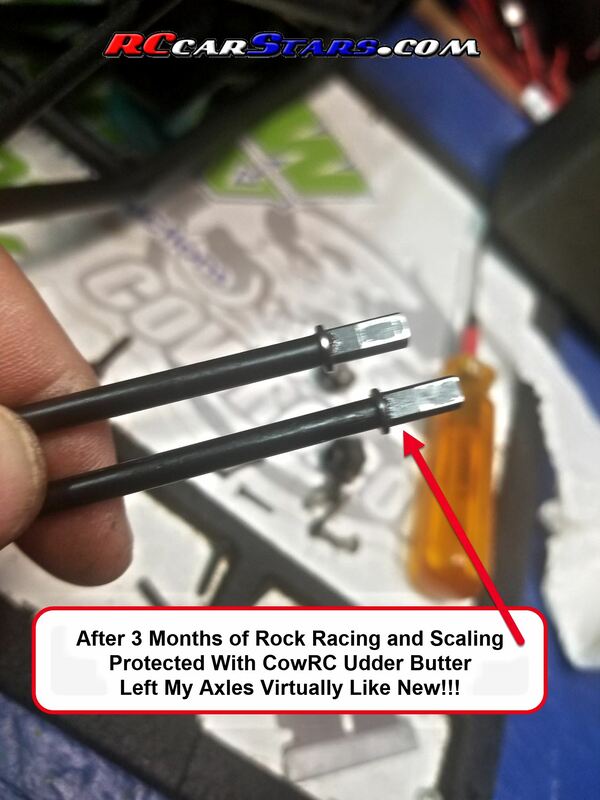
Below you will see some examples of my personal Axial Wraith's Rear Axles and Ring Gears after three months of U4RC rock racing and some scaling.  You can see in the pictures, that the CowRC Udder Butter is still on the ring gear and axles. In fact, the final picture of the axles is after we cleaned them off with CowRC Moo-Clean. You can see the wear is almost non-existent and the axles where they insert into the differential is almost like new!!!  This is a great example of the CowRC product line and why we use them.
CowRC Udder Butter on Axial Wraith Ring & Pinion
CowRC Udder Butter on Axial Wraith Axles After 3 Months of Racing And Bashing
CowRC Udder Butter - Axial Wraith Axles Like New After 3 Months
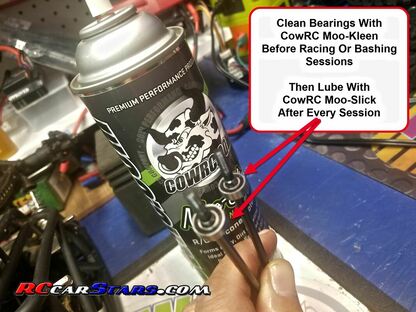
Some additional products we use for extended life and performance are the Moo-Kleen (for parts cleaning and removal of grease and grime) and Moo-Slick Silicone Lubricant, that we use after every race/bashing/scaling session.  Again in the picture below, after 3 months of use, the stock Axial Bearings that came in the kits look and spin like new.  And because we religiously at least lube with Moo-Slick after every race or session, we have been able to get a years worth of use, even out of stock bearings because of our maintenance ritual and use of the CowRC performance lubes and cleaners.
CowRC Moo-Kleen & Moo-Slick Used on Axial Stock Bearings for Extended Life and Performance
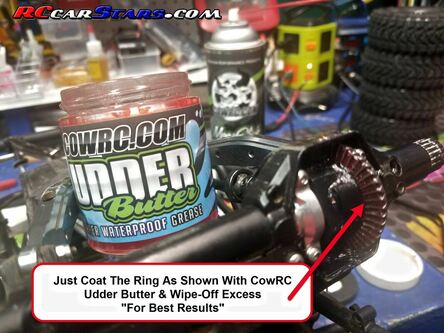
One final item to discuss in this post is "how much grease is best?"  We are always in the school of thought that to much grease can cause drag on drivetrains and because CowRC's Udder Butter has good adherence properties along with a formula that truly lubricates at all temperatures and RPMs, you don't need much.  In the example below, we just cover the teeth on the ring and pinion in the differential and wipe off the excess. That is all that is needed whether you had Heavy Duty 8 scale ring and pinions or stock pot-metal ring and pinions. 

Here's a tip for you, It should be noted that most failures of ring and pinions are not caused by the lube failing, but the lack of proper shimming on the pinion on the ring gear.  So always try and eliminate the slop without making it to tight against the ring gear.
Proper amount of CowRC Udder Butter on Gearing
As always, we hope you found this article helpful and if you are already an expert at RC maintenance, share this post with a friend that is just starting out or learning to wrench on their own RC cars and trucks. 

Best Regards,

The RCcarStars
​
#RCcarMaintenance

1 Comment

Brushed vs Brushless Motors for Crawling/Scaling

3/24/2019

2 Comments

 
Team Brood Brushed Motors
Holmes hobbies Brushed Motors
Tekin Brushed Motors
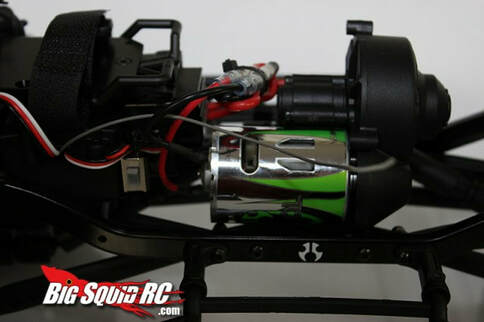
I get many customers that always want a brushless motor for crawling and scaling,  I'm posting this article from BigSquidRC.com to help explain the basics between choosing a brushed or brushless motor for your scalers.   I personally have run both types of motors, but because I'm mainly are rock and trail guy with my scaler, I want maximum torque and power on the bottom-end without huge RPMs.  Thus I choose to go with a quality "Hand-Wound" Brushed motor from either Team Brood or Holmes Hobbies and Tekin also has a hand-wound brushless motor.

First for those of you who have had experiance with brushed motors in the past, you know when you race you always had to put your comm on a lathe to shave the comm down to get the performance needed.  That because of the high-RPMs (21000rpms), when you crawl the average comm turn less than 1500 RPMs for a 27turn to 35turn brushed motor.  And to be realistic, your comm spins more like 500 RPMs when crawling.  So really you only need to replace brushes every year or more and you can pickup the old comm lathes on eBay for $50 and shave the comm yourself if you really need to.  So why do I prefer to run a brushed motor, simple, the hand-wound motors from the companies I listed, have more low-end torque and power at a cheaper price $60 to $90 for a motor. And you can get a great brushed ESC for about $45 for a Hobbywing 1080 brushed/waterproof ESC....  You cannot beat this price and the power these little gems put out on the low-end is incredible without cogging.

The main difference between a cheap $15 to $30 brushed Machine-Wound Motor and Hand-Wound Motor is torque and power.  A good quality hand-Wound motor will always perform way better than a machine-wound motor.  That winds on a hand-wound motor and neat and tight and usually dipped insulated vs sprayed like a machine-wound.  Plus the high-end custom brushed motor usually includes better shimming and components and most builders break in the motor before shipping.  With that said, if you are on a real tight budget, a machine wound motor that is included in most RTR kits or cheap replacement brushed motor will get you on the trail for loads of fun, you just wont have the ultimate torque and power like a custom hand-wound motor offers.  
Brushed vs Brushless Motor for Scaling & Crawling
Credit: BigSquidRC.com
​Brushed vs. Brushless is a non argument pretty much everywhere in the hobby. Everyone knows brushless technology offers the most speed, reliability, ease of use, etc at this point so why even bring it up? Because scaling/crawling is one of the last stands for brushed motors, a place where the discussion still takes place with merit to both sides, that’s why. Click the “Read More” to see both points of view (and for a guest appearance by a famous talking rock).

Let’s start with the basics. Crawling is unique in that it demands low throttle performance as the defacto “thing”. That’s completely different from nearly everything else in R/C where the end goal is usually top speed. While you may be saying “Well, duh”, I bring it up because that means non-sensored brushless systems are eliminated from the equation due to glitching/cogging at low throttle. That means the real argument at hand is brushed vs. sensored brushless (sensored systems allow for smooth throttle response across the full spektrum). That’s a very important distinction to make. Let’s go with brushed first.

The most popular brushed setups are either 27 or 35 turn. This range is nice and torquey when crawling and putting it on 3S will allow for plenty of wheel speed should you need it. As long as your ESC is waterproof you can also run around in the muck relatively worry free as brushed motors operate just fine in the drink (clean them off afterwards, you don’t want mud inside of them). The best part about all this is the cost. You can score a nice waterproof system for around $50-75 (like the new Axial AE-5 ESC/27t motor as an example). If a motor goes bad a new one can be had for around $15-$25 bucks. It’s about as low cost as it gets in the r/c world.

Now for the flipside. A good sensored brushless crawling system is no slouch and in many ways is totally better than its brushed brethren. The top of the line systems have fantastic drag brake hold, smooth throttle response and gobs of wheel speed on tap. So what’s the catch then? Why isn’t everyone flocking to brushless? It’s the combination of cost and being unable to perform in certain conditions without modification.

Sensored systems DO NOT like water or mud. Waterproofing steps must be taken to insure liquid doesn’t get inside the sensor ports on the ESC or motor. Even then, if you are running in deep water or mud bogging (not out of the question for this style of truck) you are playing with fire. A soggy port can leave you standing still until it dries out or even just fry the system completely.

Cost is also a major factor. A good brushless crawling system starts at around a $200 ballpark, substantially more than a brushed system. There isn’t that big of a performance difference on the rocks in many hobbyists eyes to warrant the higher price. It’s also a piece of mind thing; you can go bash your cheaper brushed system really hard and worst case you’ll most likely be out less than $100 bucks. The guy running a $300+ top of the line Tekin Roc 412 with RX8 speedo (an amazing combination FYI) may not want to tackle the nastiest parts of the trail for fear of ruining his system…or worse, he DID run that section of the trail and DID smoke his fancy top end system (possibly inventing new curse words in the process).

So that’s the conundrum in a nutshell. If you plan on staying relatively dry or don’t mind waterproofing and want to go fast as well as crawl (i.e. you Yeti folk) then pony up for a good sensored brushless system and sleep well at night. If you are primarily just wanting to crawl obstacles, get into the nasty stuff and/or don’t want to break the bank then you are just fine staying with a high torque brushed motor.
2 Comments
<<Previous
Forward>>

    Author

    RCcarStars technicians are always happy to provide our customers and fans with tips and tricks on maintaining your RC cars and trucks. 

    Archives

    August 2022
    May 2021
    November 2020
    October 2020
    August 2019
    June 2019
    May 2019
    March 2019
    January 2019
    December 2018
    July 2017
    April 2017
    December 2016
    July 2016
    June 2016
    May 2016

    Categories

    All
    Battery Tips
    Charging Tips
    General RC Info
    General RC Tips
    Product Reviews
    RCcarStars YouTube Vids
    RC Kits
    RC Motor Tips
    RC Pit Products

    RSS Feed

©  2025. The content on this website is owned by RCcarStars.com. You may not copy, reproduce or distribute any content (including images) without our approval and written consent of RCcarStars.
RC Scaler Services RC Shock Duplication  RC Parts Intallation Service  RC Fluid Changing  RC Tire Venting  
RC Maintenance Tips  RC Diff & Transmission Repair  RC Shock Tuning & Repair  RC Electronics Soldering Services
RC Electronics Waterproofing
  RC Tire Gluing  RC ESC Programming  RC Car Tune-Up  RC Kit Assembly Service  RC Car Repair Services San Diego
RC Straight Axle Services
 RC Transfer-Case Service​  FLORIN-IT RC Body Painting  RC Maintenance Blog​  Tekno RC Kit Builds​
Traxxas Repair Services  Radio Control Repair Services  RC Motor Service ​ RC Brushless Motor Testing - Analyzer  TLR 22 5.0 Custom Builds  
RC Body Painting Service  Crawler Scaler Services & Repairs ​Traxxas Slash 4x4 Upgrades  ​RC Beadlock Tire Mounting  RC Parts & Chassis Dyeing  Sitemap